
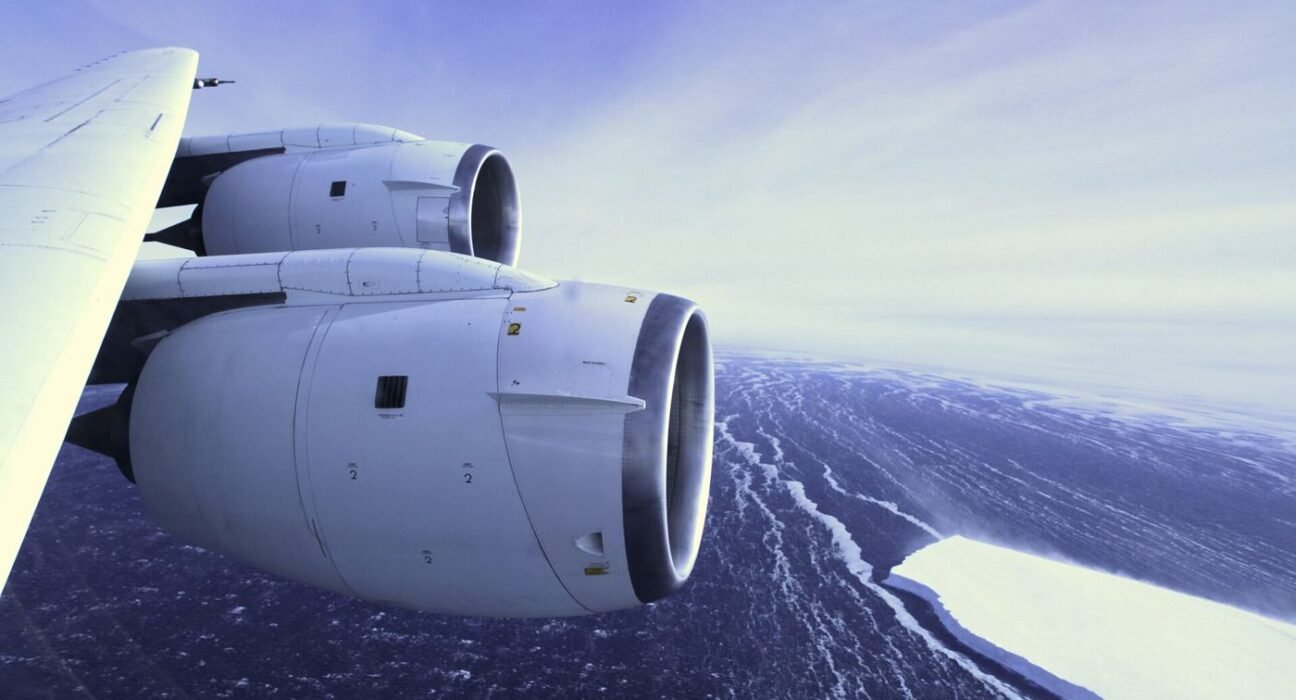
Thwaites Glacier in West Antarctica, a river of ice roughly the size of Great Britain, has been called the Doomsday Glacier because its complete loss would raise global sea levels by about 65 centimetres. A September 2025 assessment from the International Thwaites Glacier Collaboration, a seven-year, 50-million-dollar programme involving more than 100 scientists, found that the glacier’s retreat has accelerated considerably over the past 40 years. The retreat began in the 1940s, when the floating ice shelves in front of Thwaites and its neighbour Pine Island Glacier detached from ridges on the seabed. The collaboration judged a full collapse unlikely in the next few decades, but said further and faster retreat is expected through the 21st and 22nd centuries. The glacier holds enough ice to raise sea levels worldwide, which is why scientists from two nations spent seven years and 50 million dollars studying it.
What the Evidence Shows
The most striking finding came in a study published in Geophysical Research Letters in July 2026, led by the British Antarctic Survey. Researchers ran three computer models in which ocean melting beneath Thwaites and Pine Island Glacier was switched off completely, and Thwaites kept losing ice for the entire 150-year simulation. The result means that past changes have already committed the glacier to unavoidable future loss that cannot be undone simply by cooling the ocean. Thwaites currently accounts for about 8 percent of the rate of global sea-level rise, and a general collapse of the West Antarctic Ice Sheet over the coming centuries cannot be ruled out. The authors say the best hope is rapid decarbonisation to slow the loss and avoid triggering similar retreat elsewhere. Coastal cities from Miami to Dhaka are already planning for higher seas, and the fate of Thwaites will help decide how high those seas eventually rise. Reporting and analysis from sources such as National Science Foundation track the same developments, and specialists following Thwaites Glacier committed ice loss say the direction is now consistent across independent lines of evidence.
The Wider Context
The wider context is a research landscape in which replication and open data now decide reputations. Findings connected to Thwaites Glacier committed ice loss are being checked by independent groups with shared datasets, and the teams involved publish their methods in full so rivals can test every step. That discipline is slower than a headline cycle, but it is why results in this area increasingly survive first contact with scrutiny.
What Happens Next
What happens next in the story of Thwaites Glacier committed ice loss will be decided by follow-up work already under way: larger samples, longer observation and instruments that have not yet come online. The researchers involved are unusually united on one point, that the current results justify the next investment of time and money. Readers will not have to wait long for the first tests of that claim. You can follow related developments in our coverage of science.
There is a practical lesson in all of this for readers deciding what to do today. Start with the verified facts, be wary of anyone promising certainty, and prefer reversible steps while the evidence is still developing. Circumstances differ by country, income and personal situation, so general guidance should always be weighed against your own context before you act on it in any significant or lasting way.