
Introduction
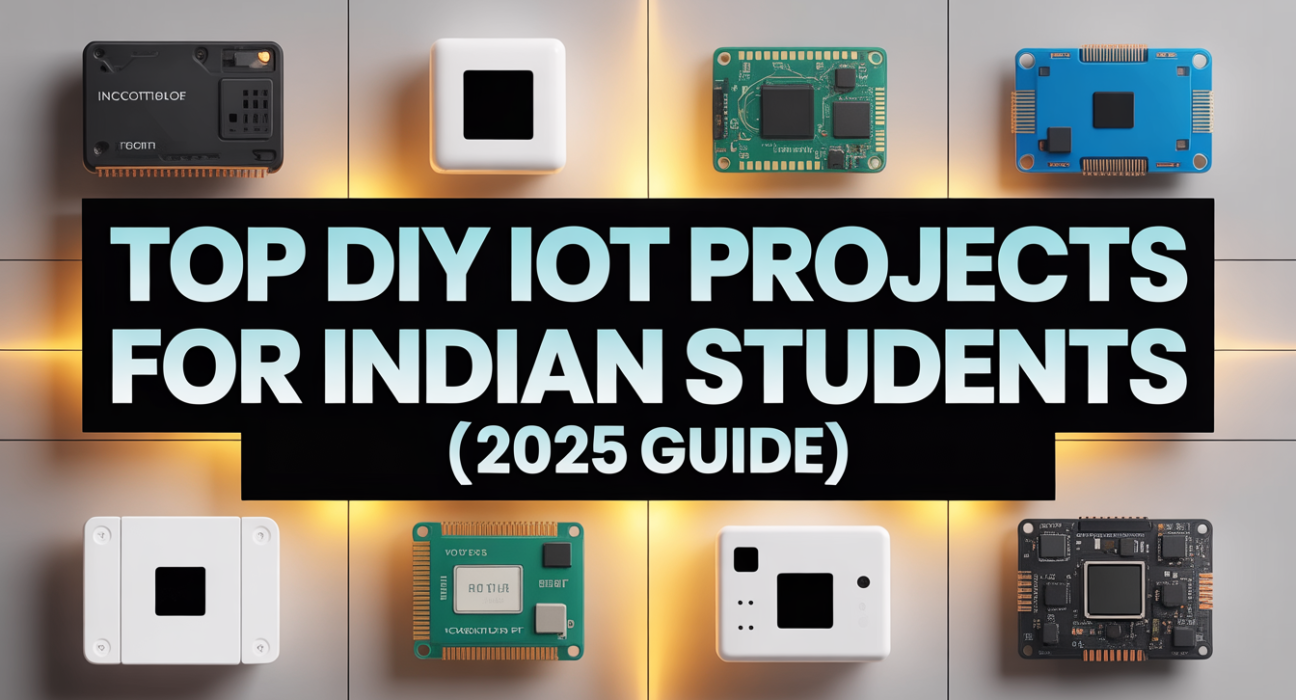
The Internet of Things (IoT) is reshaping technology education in India. For students and beginners, DIY IoT projects are a practical way to learn coding, electronics, and real-world problem solving. This guide explores top projects that are affordable, beginner-friendly, and highly educational.
What is DIY IoT?
DIY IoT (Do-It-Yourself Internet of Things) refers to hands-on projects where individuals design, build, and program smart devices using sensors, microcontrollers, and connectivity tools. These projects help students grasp technology concepts while solving real-world problems.
Why DIY IoT Matters for Indian Students
IoT DIY projects benefit various groups:
- Students & Beginners: Practical learning beyond textbooks
- Engineering & Tech Enthusiasts: Build portfolio-ready projects
- Educators & Mentors: Facilitate interactive learning
- Startups & Innovators: Rapid prototyping of smart solutions
- Hobbyists: Explore technology creatively at low cost
How DIY IoT Projects Work
DIY IoT projects combine hardware, software, and connectivity to perform tasks intelligently. Key components and features include:
Microcontrollers & Boards
- Arduino: Beginner-friendly, affordable, ideal for sensors
- Raspberry Pi: Powerful for advanced projects, supports Python
- ESP32 / ESP8266: Wi-Fi-enabled, compact, low-power IoT tasks
Sensors & Actuators
- Temperature & Humidity Sensors: Smart weather stations
- Motion Sensors: Home security or automation
- Relay Modules & Motors: Automated devices and robotics
Connectivity & Platforms
- Wi-Fi / Bluetooth / LoRa: Wireless device communication
- IoT Platforms: ThingsBoard, Blynk, or Node-RED for dashboards
Programming & Logic
- Languages: Python, C++, Arduino IDE
- Logic: Sensor input → Microcontroller processing → Action output
Practical Use Cases & Examples
- Smart Plant Watering System: Moisture sensor triggers automatic watering. Perfect for students learning sensors and automation.
- IoT Weather Station: Collects temperature, humidity, and pressure data; displays online via dashboards.
- Home Security System: Motion detection, alert notifications, and smart lock integration.
- Smart Energy Meter: Tracks electricity usage, sends real-time notifications.
- IoT Health Monitor: Heart rate and temperature sensors with mobile notifications.
Comparison / Alternatives
| Project Type | Difficulty | Cost (INR) | Learning Focus | Real-world Use |
|---|---|---|---|---|
| Smart Plant Watering | Easy | 500–1000 | Sensors & Automation | Home/Garden |
| IoT Weather Station | Medium | 1000–2500 | Data Logging & Networking | Academic/Environment |
| Home Security System | Medium | 1500–3000 | Motion Sensors & Alerts | Residential Safety |
| Smart Energy Meter | Medium | 2000–3500 | IoT Analytics | Smart Homes |
| IoT Health Monitor | Hard | 2500–5000 | Bio-sensors & Data | Personal Health |
Benefits & Limitations
Pros:
- Hands-on learning improves understanding
- Portfolio-ready projects for careers
- Affordable & scalable in India
- Encourages creativity and problem solving
Cons:
- May require basic programming knowledge
- Hardware availability can be limited in smaller towns
- Internet connectivity is necessary for some projects
Implementation / Adoption Cheklist
- Define Project Goal: Choose a project matching your skill level and interest.
- Gather Materials: Buy microcontrollers, sensors, and connectivity modules online (Amazon India, Robu.in, or local stores).
- Learn Basics: Understand coding, electronics, and IoT protocols.
- Build & Test: Assemble hardware, program software, and test in stages.
- Document & Share: Maintain logs, diagrams, and share results on GitHub or competitions.
- Scale Up: Upgrade sensors or integrate multiple devices for advanced projects.
Frequently Asked Questions(FAQs)
Q1: Are DIY IoT projects suitable for absolute beginners?
Yes. Many projects like smart plant watering or temperature monitoring are beginner-friendly and require minimal coding experience.
Q2: How much does a DIY IoT project cost in India?
Costs vary from ₹500 to ₹5000 depending on the complexity and hardware used. Basic projects are very affordable.
Q3: Which microcontroller is best for Indian students?
Arduino Uno is ideal for beginners due to ease of use, affordability, and extensive online resources.
Q4: Can DIY IoT projects be used for competitions?
Absolutely. Many Indian students use these projects for science fairs, hackathons, and tech exhibitions.
Q5: Is an internet connection required for all IoT projects?
Not always. Offline projects like sensor-triggered actuators work without the internet, but online dashboards and alerts need connectivity.
Conclusion
DIY IoT projects offer Indian students an exciting way to learn technology, build practical skills, and explore career opportunities. Start with simple projects like smart plant watering, then gradually move to advanced dashboards and health monitors. In 2025 and beyond, hands-on IoT experience will remain essential for innovation in India’s tech ecosystem.
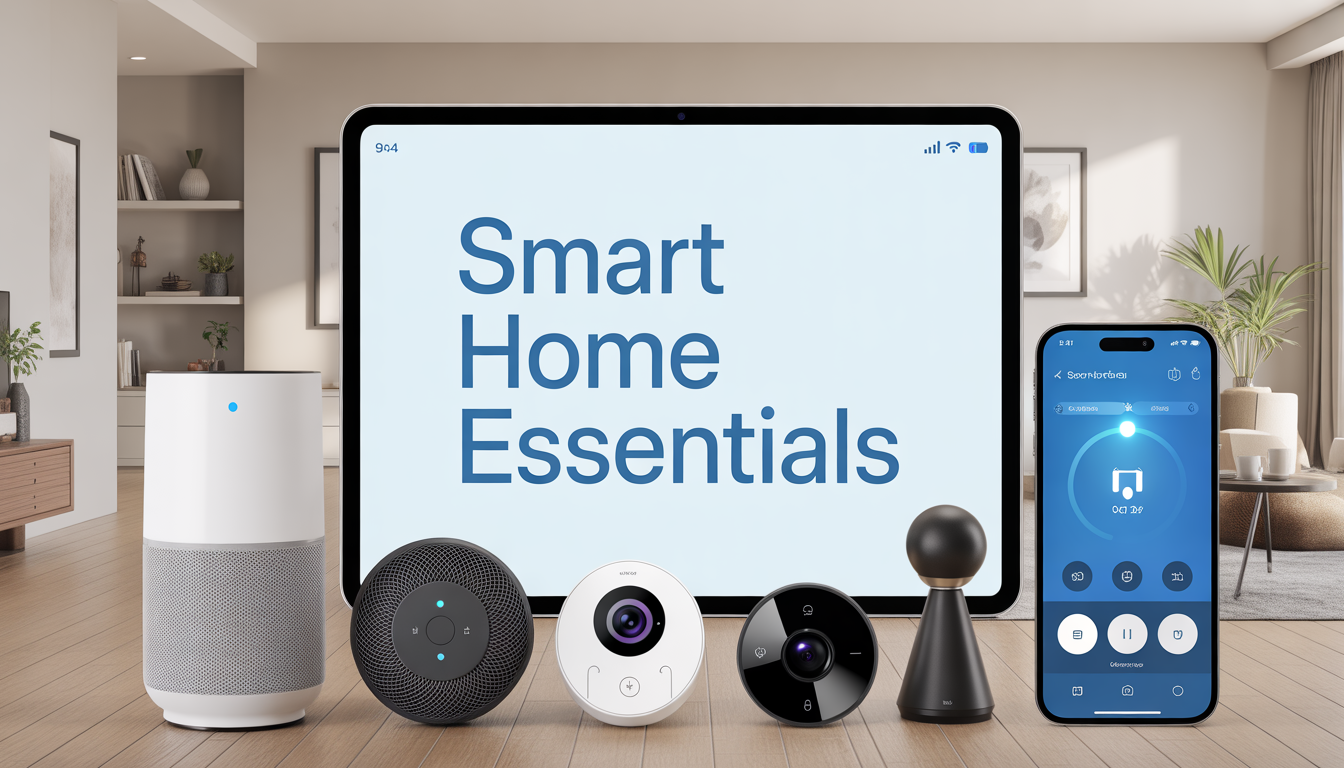
Read more: Smart Home Essentials: IoT Devices Every Indian Should Know
LSI / Semantic Keywords
- IoT projects for beginners
- Arduino projects India
- Raspberry Pi DIY projects
- Smart home devices
- IoT learning kits
- Student tech projects
- DIY electronics
- Affordable IoT solutions