

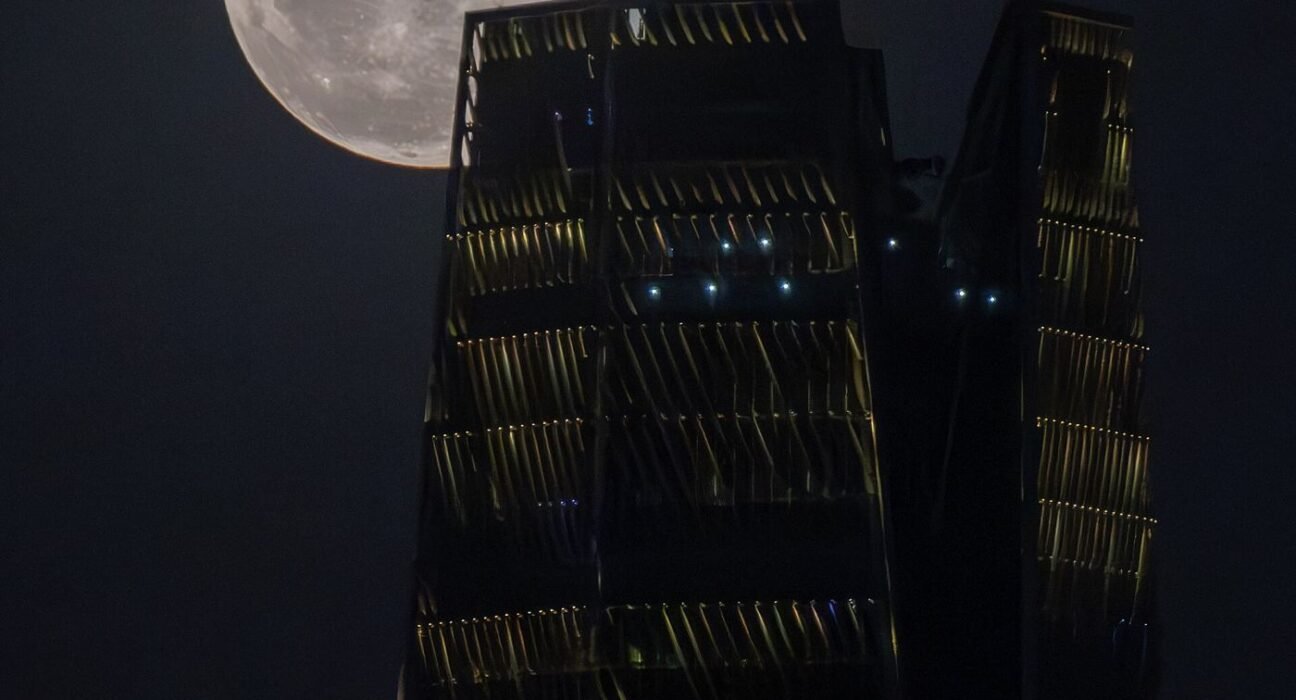
A Houthi missile struck Riyadh’s tallest skyscraper on 19 November 2026, blowing out windows across seven to eight floors of the Public Investment Fund Tower in the Saudi capital’s financial district. The 80-storey tower, 385 metres tall, houses the headquarters of Saudi Arabia’s sovereign wealth fund, and the blast bent parts of its metal facade. Saudi civil defence said the attack caused material damage to the tower and nearby buildings but no injuries were reported, and entrances to the King Abdullah Financial District were closed as people were evacuated. It was the second time in less than two weeks that a Houthi attack had damaged a landmark in the district, after the state oil company Aramco’s building was hit on 8 November. The Houthis claimed the strike and said they had targeted the financial centre twice that day.
What the Evidence Shows
The attack is the latest escalation in the renewed fighting between the Iran-aligned Houthi movement, also known as Ansar Allah, and Saudi Arabia. The Houthis also said they had attacked King Khalid International Airport in Riyadh, the Khamis Mushait airbase in the south and the SADAF petrochemical company in Jubail. Two days later, on 21 November, the Saudi-led coalition said it had intercepted three ballistic missiles fired towards Riyadh. Pakistan condemned the tower attack as a grave violation of Saudi sovereignty. The strikes show that the Houthis can still reach the heart of the Saudi capital despite years of air defences, and they raise the risk of a wider round of retaliation as the Yemen conflict intensifies. The PIF Tower, at 385 metres, is the tallest building in Riyadh and the headquarters of a fund managing roughly 900 billion dollars in assets. Reporting and analysis from sources such as Associated Press track the same developments, and specialists following the Houthi missile strike on Riyadh’s PIF Tower say the direction is now consistent across independent lines of evidence.
The Wider Context
Regional and local reporting on the Houthi missile strike on Riyadh’s PIF Tower often tells a different story from national coverage, because the effects land unevenly: one town’s pilot is another’s distant proposal. Analysts who follow the subject full-time read the local data first, arguing that national averages conceal the variation that decides whether a policy or a project deserves to spread.
What Happens Next
The longer story of the Houthi missile strike on Riyadh’s PIF Tower is still being written by the people closest to it, whose experience rarely matches the earliest predictions of either supporters or critics. Reporting will continue to follow the evidence as it accumulates, including where it complicates today’s account. That is the deal serious coverage makes with its readers, and it holds for this subject as for any other. You can follow related developments in our coverage of news.
It is also worth remembering how quickly the picture in this area has changed before. Positions that looked settled a few years ago have been revised as new data arrived, and the same humility is appropriate now. The strongest coverage of this subject, and the most useful advice, tends to come from sources that update their views openly when the facts move, rather than defending an earlier position long after it has stopped fitting the evidence available.