
Introduction
Indian agriculture is at a crossroads. Traditional methods struggle to meet growing food demands, unpredictable weather, and resource scarcity. IoT (Internet of Things) offers a game-changing solution, enabling farmers to monitor crops, soil, and machinery in real-time for smarter, efficient farming.
What is IoT in Indian Agriculture?
IoT in agriculture refers to interconnected devices and sensors that collect, transmit, and analyze data from fields, crops, and livestock. These insights help farmers make informed decisions on irrigation, fertilization, pest control, and machinery management, optimizing productivity and reducing costs.
Why It Matters / Who Benefits
IoT adoption in Indian agriculture benefits:
- Farmers – Real-time crop and soil monitoring for higher yields.
- Agri-tech startups – Opportunities to develop smart solutions.
- Government agencies – Improved agricultural planning and resource allocation.
- Investors & businesses – Data-driven insights for agribusiness decisions.
- Consumers – Access to better-quality, traceable produce.
How It Works / Key Features
H3: Smart Sensors
IoT devices like soil moisture, temperature, and pH sensors continuously gather data. This allows precise irrigation, reducing water waste.
H3: Automated Irrigation Systems
Connected pumps and sprinklers respond to sensor data, delivering water only where and when needed, conserving resources.
H3: Crop Monitoring Drones
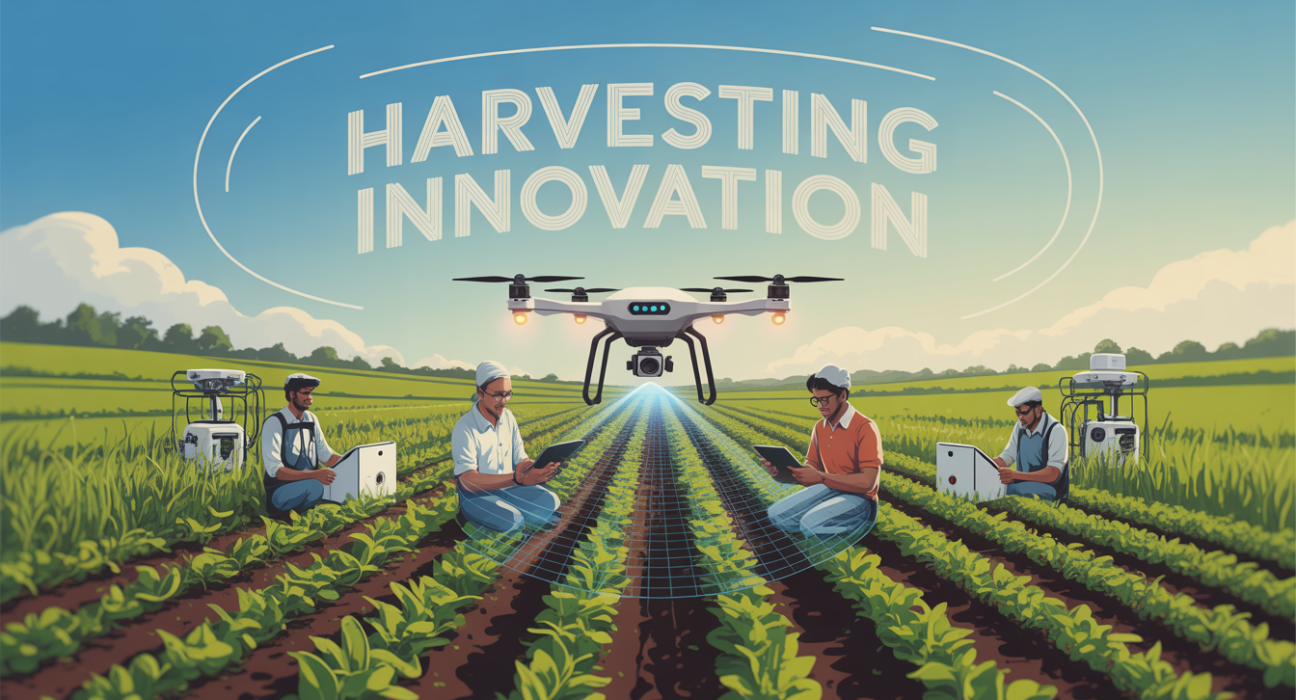
Drones equipped with cameras and multispectral sensors track crop health, detect pest attacks, and estimate yield.
H3: Livestock Tracking
Wearables on cattle monitor health, feeding patterns, and location, reducing disease risk and improving productivity.
H3: Data Analytics Platforms
Collected data is analyzed on cloud platforms, providing actionable recommendations for fertilization, harvesting schedules, and pest control.
Practical Use Cases & Examples
- Precision Irrigation: A tomato farm in Maharashtra uses soil moisture sensors to reduce water use by 30%.
- Smart Fertilization: IoT-enabled devices detect nutrient deficiency in wheat fields in Punjab, improving yields by 15%.
- Pest Management: IoT sensors detect early signs of pest infestations in cotton fields, enabling timely pesticide application.
- Livestock Health Monitoring: Dairy farms in Gujarat track cow activity and milk production through wearable IoT devices.
Comparison / Alternatives
| Feature | Traditional Farming | IoT-Enabled Farming |
|---|---|---|
| Crop Monitoring | Visual inspection | Real-time sensor & drone data |
| Irrigation | Manual scheduling | Automated, sensor-driven |
| Pest Control | Reactive | Predictive & targeted |
| Resource Use | High wastage | Optimized & efficient |
| Cost | Low initial, high long-term | Higher setup, lower operational |
Benefits & Limitations
Pros:
- Higher crop yields and productivity
- Reduced water, fertilizer, and pesticide waste
- Data-driven decisions improve efficiency
- Early disease and pest detection
- Traceability of produce
Cons:
- Initial investment can be high
- Requires internet connectivity in rural areas
- Training needed for farmers
- Sensor maintenance and calibration required
Implementation / Buying / Adoption Checklist
- Assess farm needs: Determine crops, livestock, and irrigation requirements.
- Select IoT devices: Sensors, drones, wearables, and automated irrigation systems.
- Choose a data platform: Cloud or mobile apps for real-time insights.
- Check connectivity: Ensure stable internet or cellular network coverage.
- Train staff/farmers: Provide hands-on training for device operation.
- Monitor & optimize: Regularly review data to refine operations.
Frequently Asked Questions(FAQs)
Q1: How much can IoT improve crop yield in India?
IoT can increase crop yield by 10–30% by optimizing irrigation, fertilization, and pest control through precise, real-time monitoring.
Q2: Is IoT in farming expensive for small farmers?
Initial costs exist, but affordable sensor kits and government-supported programs make IoT adoption feasible even for small-scale Indian farms.
Q3: Can IoT work in rural areas with poor internet?
Yes, some IoT devices use low-power wide-area networks (LPWAN) or offline data storage that syncs when connectivity is available.
Q4: Are drones essential for IoT agriculture?
Not essential but highly beneficial. Drones provide rapid crop monitoring and pest detection, complementing ground-based sensors.
Q5: How do I maintain IoT devices on a farm?
Regular calibration, battery replacement, and software updates are needed. Many vendors offer maintenance contracts for Indian farms.
Conclusion
IoT in Indian agriculture is transforming traditional farming into data-driven, efficient, and sustainable practices. By adopting smart sensors, automated irrigation, and drones, farmers can optimize resources, improve yields, and reduce costs. Future outlook: As connectivity and technology costs decrease, IoT will become an integral part of Indian agriculture, enabling precision farming at scale.
Read more: 5G and IoT: What Indian Developers Need to Know
LSI / Semantic Keywords
- Smart farming India
- Precision agriculture
- Agricultural sensors
- IoT-enabled irrigation
- Drone monitoring crops
- Livestock management IoT
- Data-driven agriculture
- Agri-tech solutions India