
Introduction
Artificial intelligence is reshaping how Indian businesses, developers, and everyday users work, learn, and create. In 2025, India isn’t just using AI — it’s driving adoption at a global scale. The convergence of affordable tech, strong digital infrastructure, and rising skills makes this a transformative year. Yet beginners and decision‑makers alike need a clear roadmap to navigate what’s trending now.
What is Top AI Trends in India 2025?
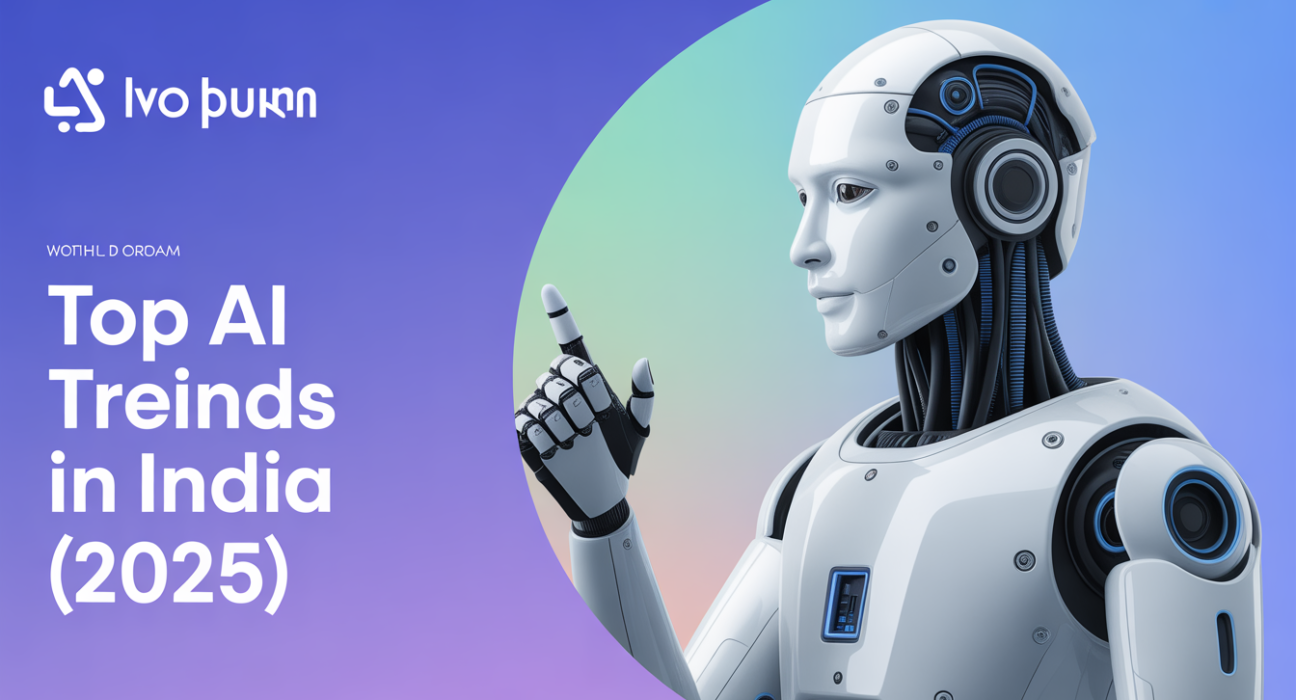
AI trends in India 2025 refer to the key developments, technologies, and adoption patterns in artificial intelligence that are shaping India’s tech landscape this year — from generative models and automation to sector‑wide integration and talent growth.
Why it Matters / Who Benefits
AI trends in India 2025 matter because they help leaders, developers, and tech buyers:
- Identify high‑growth opportunities in software and services
- Stay competitive with emerging tools and platforms
- Plan AI adoption and budgets
- Upskill for future‑ready careers
- Leverage regional language and inclusive AI
How it Works / Key Features of AI Trends (2025)
1. Generative AI Takes the Center Stage
Generative AI — models that create text, code, images, and videos — are now core to innovation.
- Tools like Google Gemini, Grok, Perplexity and DeepSeek saw massive search interest in India in 2025, showing widespread curiosity and use across users. Tech Insights: Synarion IT Solutions
- These models streamline tasks from drafting emails to generating creative content.
2. Democratisation Through Low‑Code/No‑Code
AI is no longer only for experts. Low‑code and no‑code platforms are empowering small businesses and non‑technical teams to build AI‑driven solutions. CIOL
3. Enterprise AI Adoption Grows Rapidly
A large percentage of Indian companies are increasing AI investment this year — with expectations to expand use across departments and functions. The Economic Times
4. Localised & Multilingual AI Tools
India’s diverse language landscape is driving demand for regional language support in AI — from chatbots to translation tools like Adi Vaani (AI for tribal languages). Wikipedia
5. AI in Industry‑Specific Domains
AI isn’t limited to software anymore — it’s powering real‑world projects:
- Healthcare diagnostics and automated reporting
- Smart railway inspections and safety systems
- AI in law, translation, policing, and cybersecurity
(These reflect broader AI adoption trends across sectors.)
6. Explainable & Responsible AI
With greater use comes demand for transparency — Explainable AI (XAI) helps stakeholders understand how AI makes decisions, increasing trust. Cpluz
Practical Use Cases & Examples
AI in Everyday Workflows
- Automated email replies, meeting summaries, and content creation with Gemini.
- Real‑time search and answers for research or business questions using Perplexity. Tech Insights: Synarion IT Solutions
AI in Business
- Predictive analytics for customer behaviour.
- Marketing automation to boost campaign efficiency. squareit.in
AI in Public Services
- Translation tools for tribal languages improve accessibility. Wikipedia
- AI‑based crowd management and policing systems enhance safety.
Comparison: Traditional Tools vs AI‑Enabled Solutions
| Aspect | Traditional Systems | AI‑Enabled Solutions |
|---|---|---|
| Content creation | Manual techniques | AI‑assisted automation |
| Search & answers | Keyword search | Contextual, source‑backed AI responses |
| Software dev | Hand‑coding | Low‑code / generative assistance |
| Decision support | Static dashboards | Predictive and real‑time insights |
| Language support | Limited regional | Multilingual AI tools |
Benefits & Limitations
Benefits
- Faster productivity across sectors
- Cost reduction in repetitive tasks
- Access to advanced analytics for SMEs
- Inclusive tools for local languages
Limitations
- Data quality and bias can skew outcomes
- Skill gap in advanced AI roles
- Ethical and explainability concerns
- Integration challenges in legacy systems
Implementation / Adoption Checklist
Before adopting AI in your project or business:
- Define goals (productivity, automation, personalization)
- Assess data readiness (quality, privacy, access)
- Choose tools (platforms with strong local language support)
- Train teams (technical skills + ethical AI guidelines)
- Pilot first, then scale with measurable KPIs
- Monitor & iterate frequently
Frequently Asked Questions(FAQs)
What makes AI trends in India 2025 unique?
India’s trends combine global advances like generative models with local priorities such as multilingual tools and mass adoption across SMBs and enterprises. EY
Do beginners need coding skills to use AI tools?
No — low‑code and no‑code platforms are lowering barriers, enabling non‑developers to build workflows. CIOL
How is AI impacting jobs in India?
AI is creating new roles while automating repetitive tasks. Continuous learning and upskilling are key to future success. The Economic Times
Is AI adoption in India high compared to the world?
Yes — India shows one of the highest AI adoption rates, with a major share of businesses increasing AI spending. The Economic Times
Can AI tools support Indian languages?
AI is increasingly catering to regional languages through localized models and translation platforms. Wikipedia
Conclusion
India’s AI trends in 2025 reflect a shift from experimentation to widespread real‑world application. Generative AI, enterprise adoption, and inclusive tools are unlocking value across industries. For beginners and leaders alike, the time to learn, adapt, and experiment with these technologies is now.
Recommendation: Start with practical pilots using accessible AI platforms, integrate learning across teams, and set clear ROI metrics.
Future Outlook: As adoption matures, expect AI to evolve into personalized, ethical, and multilingual systems that power India’s digital economy beyond 2025.
Read more: Building Your First AI Project: A Step-by-Step Guide for Indian Learners
LSI / Semantic Keywords
- generative AI adoption India
- AI tools India 2025
- enterprise AI trend India
- regional language AI
- low‑code AI platforms
- AI in healthcare India
- multilingual AI models
- explainable AI trend