

Introduction
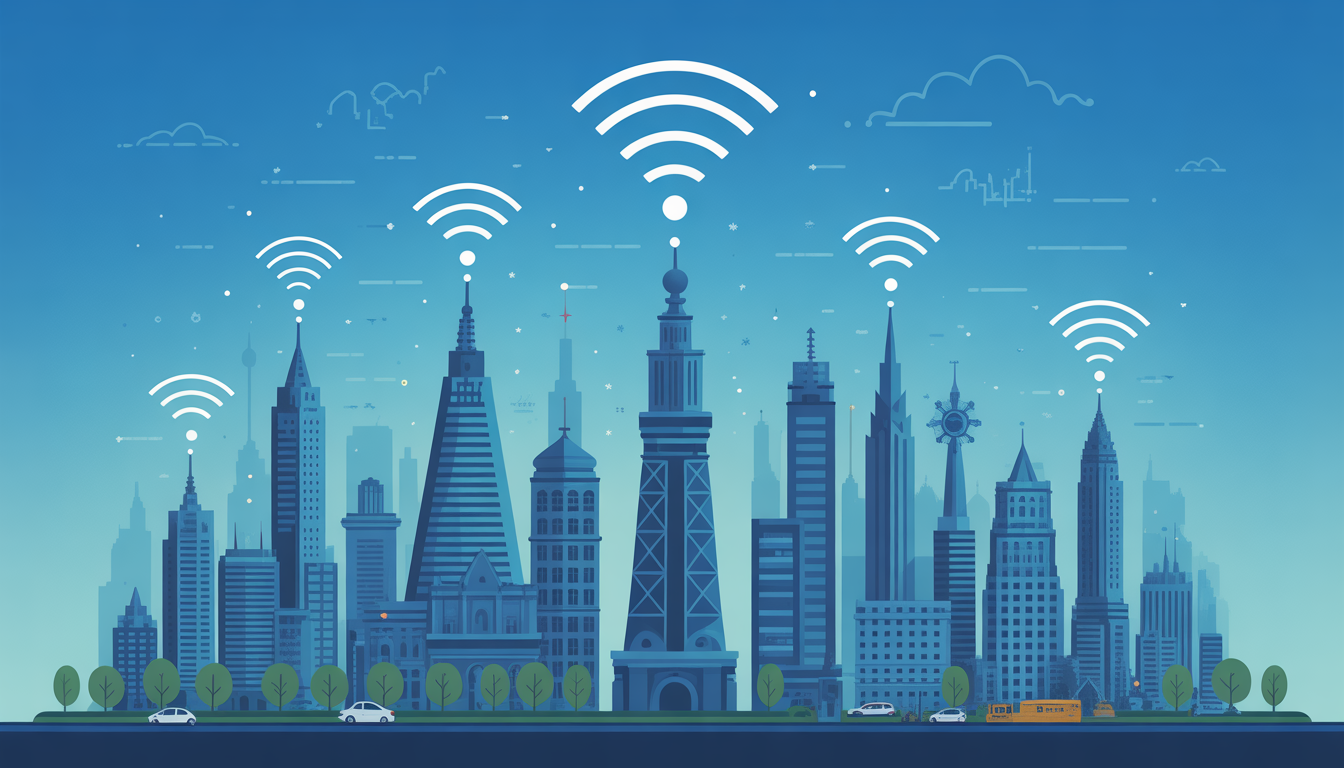
5G is no longer just a faster mobile network—it’s the backbone of the next wave of IoT innovation in India.
For Indian developers, understanding how 5G and IoT intersect is now essential to building scalable, real-time, and commercially viable solutions.
From smart cities to industrial automation, the combination of 5G and IoT is reshaping how devices connect, process data, and deliver value. This guide breaks it down in a beginner-friendly yet technically sound way.
What is 5G and IoT?
5G and IoT refer to the integration of fifth-generation mobile networks with Internet of Things devices to enable ultra-fast, low-latency, and highly reliable machine-to-machine communication at massive scale.
In simple terms, 5G acts as the high-speed nervous system, while IoT devices are the sensors, machines, and endpoints generating and consuming data in real time.
Why 5G and IoT Matter in India
India presents a unique mix of scale, diversity, and digital ambition. The synergy between 5G and IoT directly supports national and commercial goals.
Who benefits the most:
- Developers & startups building real-time, data-driven applications
- CTOs & tech leaders planning future-ready architectures
- Enterprises adopting Industry 4.0 and automation
- Government & public sector driving smart city and infrastructure projects
- Telecom & cloud providers expanding digital ecosystems
With India’s push toward digital transformation, 5G-enabled IoT is becoming a strategic technology rather than an experimental one.
How 5G and IoT Work Together
High-Speed Connectivity
5G delivers data speeds up to 10–20 Gbps under ideal conditions.
For IoT, this means faster data transfer from cameras, sensors, and machines without network congestion.
This is especially critical for applications like video analytics, autonomous systems, and AR/VR-enabled IoT dashboards.
Ultra-Low Latency
Latency in 5G can drop below 10 milliseconds.
Low latency allows IoT systems to respond almost instantly, which is vital for safety-critical use cases.
Examples include robotic control, remote surgery support, and intelligent traffic systems.
Massive Device Density
5G supports up to 1 million devices per square kilometer.
This enables dense IoT deployments in factories, cities, ports, and campuses.
Indian developers can now design systems assuming large-scale sensor networks without performance bottlenecks.
Network Slicing
Network slicing allows telecom operators to create virtual networks optimized for specific use cases.
For IoT developers, this means:
- Dedicated bandwidth for critical applications
- Higher reliability for industrial or healthcare IoT
- Cost optimization for low-power consumer devices
Edge Computing Integration
5G works closely with edge computing, where data is processed closer to the source.
This reduces cloud dependency, lowers latency, and improves data privacy—key considerations for Indian enterprises handling sensitive data.
Practical Use Cases of 5G and IoT in India
Smart Cities
5G-powered IoT enables:
- Intelligent traffic management
- Smart street lighting
- Real-time air and noise pollution monitoring
Cities like Delhi, Pune, and Bengaluru are actively piloting such solutions.
Industrial IoT (IIoT)
Manufacturing units use 5G IoT for:
- Predictive maintenance
- Robotic automation
- Digital twins of machinery
This directly supports India’s “Make in India” and Industry 4.0 initiatives.
Agriculture & AgriTech
IoT sensors combined with 5G help farmers monitor:
- Soil moisture and nutrients
- Weather conditions
- Automated irrigation systems
Low latency improves decision-making and reduces water and fertilizer waste.
Healthcare & Telemedicine
5G-enabled IoT devices support:
- Remote patient monitoring
- Wearable health sensors
- Smart ambulances with real-time data streaming
This is especially impactful in rural and semi-urban India.
Logistics & Supply Chain
5G and IoT improve:
- Fleet tracking
- Cold-chain monitoring
- Warehouse automation
Real-time visibility reduces losses and improves operational efficiency.
5G vs Other Connectivity Options for IoT
| Feature | 5G | 4G/LTE | NB-IoT | Wi-Fi |
|---|---|---|---|---|
| Latency | Ultra-low | Medium | High | Low |
| Speed | Very high | High | Low | High |
| Device density | Massive | Limited | High | Limited |
| Mobility | Excellent | Good | Limited | Poor |
| Best for | Real-time IoT | General apps | Simple sensors | Indoor use |
5G is not a replacement for all IoT networks, but it is the best choice for mission-critical and real-time applications.
Benefits and Limitations of 5G and IoT
Pros
- Enables real-time, intelligent applications
- Supports massive IoT deployments
- Improves reliability and uptime
- Unlocks advanced use cases like autonomous systems
- Future-proof network architecture
Cons
- Higher infrastructure and device costs
- Limited 5G coverage in rural areas (as of early 2026)
- Increased complexity in security and network management
- Requires skilled developers and architects
Understanding these trade-offs helps developers choose the right architecture.
Implementation Checklist for Indian Developers
Step 1: Identify the Right Use Case
Not all IoT projects need 5G.
Choose 5G only if your application requires:
- Real-time response
- High bandwidth
- Mobility at scale
Step 2: Choose Compatible Hardware
Ensure IoT devices support:
- 5G NR bands used in India
- Edge computing capability
- Secure firmware updates
Step 3: Design Scalable Architecture
Key components:
- Edge + cloud hybrid model
- Microservices-based backend
- Event-driven data pipelines
Step 4: Focus on Security from Day One
Security best practices:
- Device authentication
- Encrypted data transmission
- Regular OTA updates
- Zero-trust network principles
Step 5: Partner with the Right Ecosystem
Collaborate with:
- Telecom providers
- Cloud platforms
- System integrators
- Government-backed innovation programs
This reduces time-to-market and compliance risks.
Frequently Asked Questions(FAQs)
Is 5G necessary for all IoT applications?
No. Simple sensor-based IoT can work on NB-IoT or LTE.
5G is ideal for applications requiring ultra-low latency, high reliability, or real-time analytics at scale.
How does 5G improve IoT security?
5G introduces stronger encryption, network slicing, and better identity management.
However, device-level security and application-layer protection are still the developer’s responsibility.
Can startups afford 5G IoT in India?
Yes, selectively.
By using shared infrastructure, cloud-managed IoT platforms, and pilot deployments, startups can adopt 5G without massive upfront costs.
What skills do developers need for 5G IoT?
Key skills include:
- Networking fundamentals
- Cloud and edge computing
- IoT protocols (MQTT, CoAP)
- Data analytics and security
Is 5G IoT ready for production in India?
As of early 2026, urban and industrial zones are ready.
Rural adoption is growing but may require hybrid connectivity models.
Conclusion
5G and IoT together represent a major shift in how connected systems are built in India. For developers, this is an opportunity to move beyond basic device connectivity and create intelligent, real-time, and scalable solutions.
Recommendation: Start small with focused pilots, build strong fundamentals in IoT architecture and security, and scale as 5G coverage expands.
Future outlook: Over the next few years, 5G-enabled IoT will become a default layer for smart infrastructure, industrial automation, and next-generation digital services in India.
Read more: Building Your First IoT Prototype: An Indian Beginner’s Tutorial
LSI / Semantic Keywords
- 5G IoT architecture
- IoT connectivity in India
- Industrial IoT 5G
- Smart city IoT networks
- Edge computing and 5G
- IoT application development
- Telecom IoT platforms